A 100% Black-owned agro-processing enterprise on a mission to industrialise the production of affordable, ready-to-eat canned African staple foods.
Savannah Foods (Pty) Ltd is a 100% Black-owned agro-processing enterprise headquartered in Lephalale, Limpopo Province, South Africa. The company was established with a clear and compelling mandate: to industrialise the production of affordable, ready-to-eat canned African staple foods that serve the dietary needs and cultural preferences of low- and middle-income consumers across South Africa and the broader SADC region.
At our core, Savannah Foods bridges the gap between South Africa's rich culinary heritage and modern food manufacturing standards, making traditional dishes accessible on an unprecedented scale. Our flagship product, Mogodu Manje, transforms a culturally significant dish into a convenient, shelf-stable, and affordable product that can reach consumers in every corner of the country.
| Registration | Savannah Foods (Pty) Ltd |
| Location | Plot 53, Farm Tauwfontein 258 LQ, Lephalale, Limpopo, 0555 |
| Telephone | 014 112 0546 |
| info@savannahfoods.co.za | |
| Ownership | 100% Black-Owned |
The principles that guide every can of Mogodu Manje we produce.
To become the leading African-owned canned food manufacturer on the continent, recognised for making traditional African staple foods accessible, affordable, and available to every household. We envision a future where the richness of African culinary heritage is preserved and celebrated through modern food processing — reaching consumers in townships, rural villages, and urban centres alike.
To manufacture high-quality, affordable canned African staple foods that honour traditional recipes while meeting the highest international food safety and quality standards. We achieve this by investing in state-of-the-art food canning technology, employing and upskilling local communities, sourcing raw materials from regional suppliers, and building a brand that resonates with cultural identity.
Every product undergoes rigorous quality control — from raw material sourcing through retort sterilisation to final lab testing.
We honour the traditional recipes and cultural significance of African staple foods, preserving authentic flavours with modern convenience.
As a 100% Black-owned enterprise, we drive meaningful transformation through job creation (60% women, 40% youth) and local procurement.
Beyond commercial success, we measure performance by the tangible socio-economic difference we make in Lephalale and beyond.
We continuously invest in process improvement, product development, and market expansion — from local penetration to SADC and Middle East exports.
Affordable, shelf-stable protein for low-income households — reducing reliance on imported processed foods through local production.
"Mogodu Manje — Now every day is Mogodu Monday"
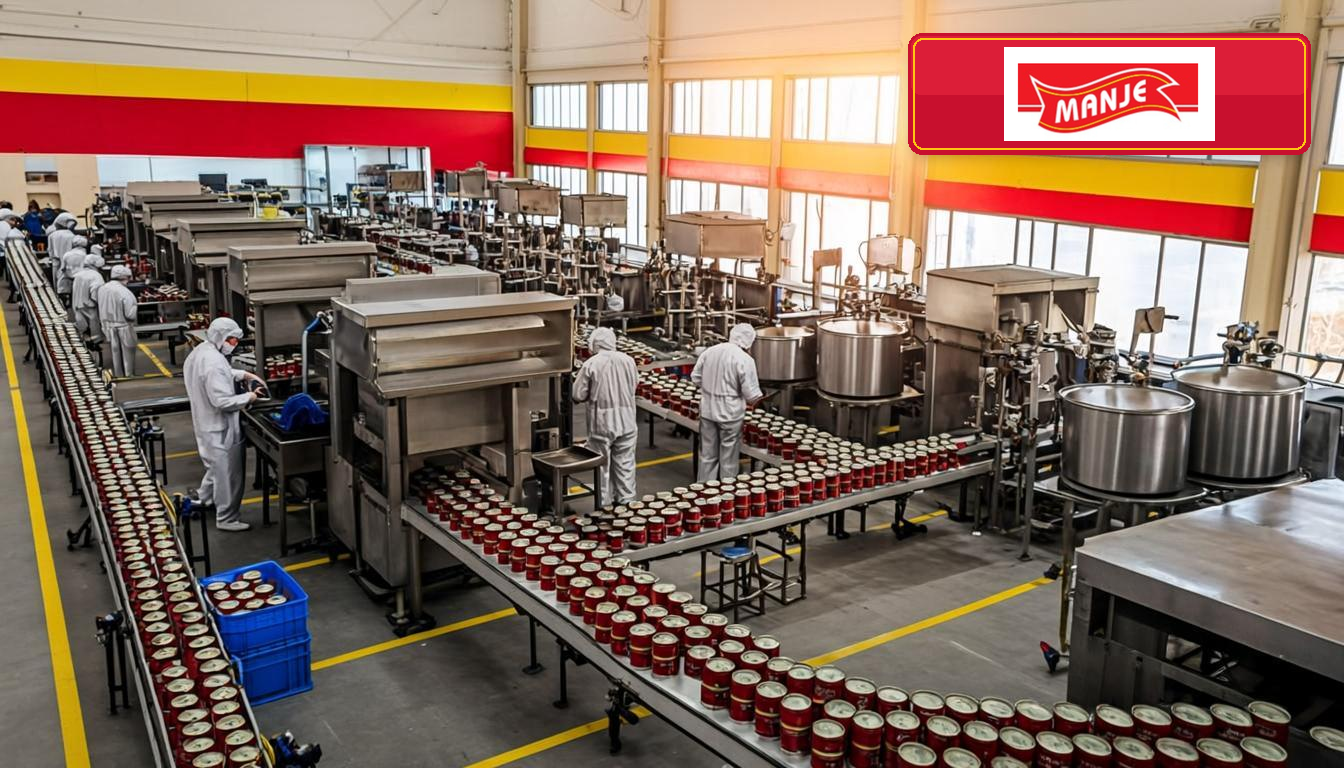
Our 20,000-can-per-day canning plant in Lephalale houses industrial steam kettles, retort sterilisation equipment, and a fully HACCP-compliant production line — purpose-built to scale a culturally beloved South African dish.
A fully integrated food canning production line designed to process 20,000 cans per day across two 12-hour shifts — with rigorous quality control at every stage.
Beef tripe from local abattoirs in Limpopo and surrounding provinces.
Raw materials transferred to cold rooms (0–4°C) or freezer rooms (−18°C).
Controlled thawing — ~8,000 kg raw tripe per day, 9 batches per 24 hours.
Specialised tripe washing drums and high-pressure cleaning systems.
Stainless steel preparation and meat cutting into uniform pieces.
Steam jacketed kettles (500L–1000L) cook in proprietary sauce.
Automatic can filling and sauce/brine dosing machines.
Double-seam can seaming for an airtight hermetic seal.
High-pressure heat treatment for commercial sterility.
Post-retort cooling to safe handling temperature.
Production dates, batch numbers, and expiry dates on every can.
Storage and outbound logistics to market.
Food safety and regulatory compliance are foundational to our operations. The entire production process is designed around HACCP principles, with critical control points identified and monitored at every stage. Our facility layout incorporates dedicated zones with physical separation between raw material handling, processing, and finished goods areas to prevent cross-contamination.
Equipped with microbiology testing equipment, pH and moisture testing instruments, and food-grade metal detectors. Staffed by two food scientists, three lab technicians, and three QA inspectors.
Every can of Mogodu Manje represents not just a meal, but a step towards rural industrialisation, food security, and economic transformation in South Africa.
100+ permanent jobs, with 60% women and 40% youth representation — driving meaningful economic transformation.
A modern food processing facility in Limpopo Province — bringing industrial capability to an underserved region.
Affordable, shelf-stable protein for low-income households — accessible nutrition without refrigeration.
Consistent demand for raw materials from local suppliers and abattoirs — strengthening the regional agricultural economy.
Training and upskilling in food manufacturing and quality control — building lasting human capital in Limpopo.
Local production reduces reliance on imported processed foods, with future export revenue from SADC and Middle East markets.
A clear, phased approach balancing prudent risk management with ambitious growth objectives.
| Phase | Focus | Key Milestones |
|---|---|---|
| Year 1 | Local Market Penetration | Full production at 20,000 cans/day; brand launch in Limpopo, Gauteng, North West |
| Year 2 | SADC Export + New Products | Export to Botswana, Zimbabwe, Mozambique, Namibia; launch chicken feet, giblets, corn |
| Year 3–5 | International Growth | Middle East export markets; new production facility planning; capacity doubling |
From a single can of Mogodu Manje to a continental brand — be part of the story that brings African heritage to every household.
Contact UsA binding declaration of how we conduct ourselves — to our customers, our people, our partners, and our country.
Effective: October 2026 · Review cycle: annualSavannah Foods (Pty) Ltd commits to operating as a responsible, transparent, and inclusive South African enterprise — building a profitable business that uplifts the communities we serve, empowers the people we employ, honours the cultural heritage we represent, and protects the natural environment on which we all depend.
This statement flows directly from our company values and is the framework against which every business decision is evaluated — from procurement choices and hiring decisions to capital investment and community engagement.
We commit to providing every household in South Africa and the broader SADC region with affordable, safe, and culturally authentic canned foods. We will listen when you speak, respond when you complain, and continually improve what we make based on what you tell us. We will never compromise on food safety, and we will never take your trust for granted.
We commit to fair employment practices, skills development, and dignified working conditions for every member of our team — from the factory floor to the executive office. We commit to advancing historically disadvantaged South Africans through employment equity, learnerships, and management development. We commit to paying a living wage, providing a safe workplace, and fostering a culture in which every voice matters.
We commit to fair, transparent, and timely dealings with every supplier — large or small, established or emerging. We commit to paying our suppliers within agreed terms, to providing constructive feedback on unsuccessful bids, and to actively supporting black-owned and women-owned enterprises through preferential procurement in line with our BBBEE commitments. We commit to building long-term relationships, not transactional ones.
We commit to being a force for good in Lephalale and the broader Limpopo Province. We will source locally wherever possible, support local farmers and small businesses, invest in education and skills development in our surrounding communities, and contribute to socio-economic development programmes that address food security, youth unemployment, and rural poverty. We measure our success not only in cans produced but in lives improved.
As a 100% Black-owned South African enterprise, we commit to advancing the goals of economic transformation, localisation, and intra-African trade. We commit to supporting South Africa's industrialisation agenda, to reducing reliance on imported processed foods through domestic manufacturing, and to growing intra-African food trade through the African Continental Free Trade Area (AfCFTA). We commit to flying the flag of African enterprise with pride and integrity.
We commit to responsible environmental stewardship in everything we do — efficient water use, responsible effluent management, energy efficiency in our processing plant, waste reduction through can recyclability (steel cans are 100% recyclable, infinitely), and continuous measurement of our environmental footprint. We commit to setting reduction targets annually and publishing our progress in our socio-economic development reports.
We commit to operating with integrity, transparency, and accountability. We commit to complying with all applicable laws and regulations, to maintaining accurate financial records, to opposing corruption in all its forms, and to upholding the principles of good corporate governance as set out in the King IV Report on Corporate Governance for South Africa. We commit to a confidential whistleblowing channel through which employees, suppliers, and the public may report unethical conduct without fear of reprisal.
This commitment is not aspirational language filed away in a strategy document. It is a living framework that we hold ourselves accountable to through: